Why Full Bands Matter More Than the Date on a 1962 Dime
A 1962 dime is not hard to find. That is the starting point. The date is common. Both Philadelphia and Denver struck large numbers, and proofs were made for collectors as well. So the year alone does not explain much. A better question is this: what makes one 1962 Roosevelt dime ordinary and another one worth closer attention?
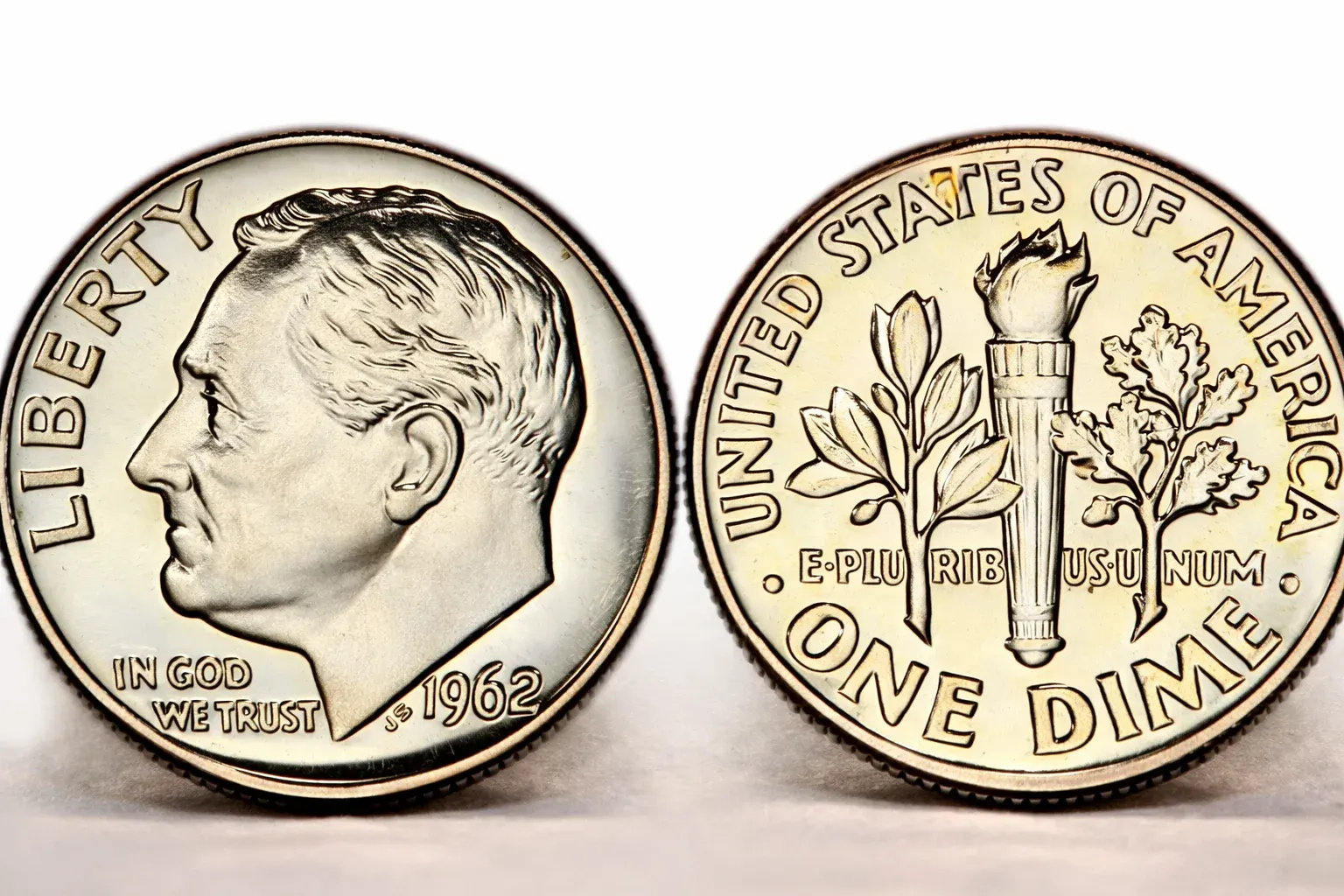
For this coin, the answer often sits on the reverse. The torch tells the story. If the bands show sharp separation, the coin moves into a different class. That is why collectors who know the series do not stop at the date. They study the strike.
Why the Date Alone Does Not Carry the Coin
Many silver Roosevelt dimes are affordable because the series includes several common dates. 1962 is one of them. That does not make it unimportant. It just means the market needs another reason to care.
That reason is usually quality.
A worn 1962 dime is mostly a silver coin. A basic Mint State piece is a normal album coin. A cleaner Mint State coin with stronger detail gets more attention. A sharply struck example with Full Bands sits higher again. The same date stays on all of them, but the market does not treat them the same way.
This is common in modern silver series. When supply is large, conditions and strikes do more work than in the year.
| Coin Type | Market Position | What Matters Most |
| Circulated 1962 Dime | Silver coin or album filler | Wear, damage, eye appeal |
| Basic Mint State 1962 Dime | Standard collector coin | Luster, marks, general sharpness |
| Higher-End Mint State 1962 Dime | Better collector piece | Cleaner surfaces, stronger strike |
| Full Bands Example | Specialist coin | Clear band separation, grade, surface quality |
| 1962 Proof Dime | Separate collector segment | Mirror fields, frost, haze, hairlines |
What Full Bands Means on a Roosevelt Dime
On the reverse of the Roosevelt dime, the torch has horizontal bands. Those bands are small, but they matter. On a stronger coin, they show clean separation. On a weaker coin, they blend together or lose definition.
That is the basic idea behind Full Bands.
Collectors use the term because it gives a fast way to describe strike quality. The date may be common, but a sharply struck reverse is not automatic. Many coins from the same year do not show the torch equally well. Some are flat. Some look decent at first glance but break down under closer inspection.
That is the point many newer buyers miss. Full Bands is not a decoration. It is a technical detail that shows the coin was struck better than average.
Why Full Bands Matters More Than the Date
A rare date can create demand by itself. A common date cannot. That is why Full Bands matters so much on a 1962 dime.
Think of it in simple terms. A collector looking at this date usually has several choices:
- A normal circulated coin
- A cheap mint state coin
- A cleaner mint state coin
- A full bands coin
The jump between those levels is not about the year. It is about quality. A collector pays more when the coin offers something harder to find within the date.
That changes the whole price structure. A non-FB coin in one grade can remain modest. A similar coin with stronger reverse detail can move into a more competitive part of the market. Registry collectors, grade-focused buyers, and Roosevelt dime specialists all watch this closely.
| Factor | Ordinary 1962 Dime | Better 1962 Dime | Full Bands 1962 Dime |
| Date | Common | Common | Common |
| Strike | Average | Above average | Strong in the torch area |
| Market Interest | Basic | Improved | Much stronger |
| Buyer Type | General collector | Selective collector | Specialist or registry buyer |
| Premium Logic | Silver or basic type | Condition-based | Condition and designation-based |
That is why the title of the article is true. The date opens the door. Full Bands decides how far the coin goes.
Full Bands Is Not the Same as “Nice Looking”
A coin can look bright and still miss the designation. A coin can have good luster and still show weak torch detail. A coin can be clean enough for a strong grade and still fall short where it matters most.
This is where mistakes happen.
A sharp-looking Roosevelt dime is not always a Full Bands dime. The reverse must hold up under closer checking. If the bands are soft, blended, or interrupted, the coin loses the main feature that makes collectors pay extra attention.
Do not confuse these things:
- Bright surfaces
- Low contact marks
- Attractive color
- Good cartwheel luster
- Strong full bands detail
Only the last point answers the Full Bands question.
That is why some coins feel disappointing after a closer look. The first impression is strong. The key detail is not.
What To Check on the Reverse Before You Assume Full Bands
This is the practical part. When you examine a raw coin, the reverse matters most. Start there.
First Look Checklist
- Check the horizontal bands on the torch
- Look for clear separation, not just partial lines
- Watch for flatness in the center
- Check whether the marks cut through the critical area
- Compare the torch detail with the rest of the coin
A weak strike often shows itself quickly. The torch will look softer than the lettering and other nearby design elements. The coin may still be nice. It just may not be a Full Bands piece.
A coin identifier app can help at the first stage. It can confirm the date, type, and mint quickly. That is useful when you sort mixed silver dimes or small dealer groups. But it does not replace close visual checking. Full Bands still has to be judged by detail.
Why 1962 And 1962-D Need the Same Approach
Collectors sometimes ask which mint is better. That is not the most useful starting question here. The more useful point is that both issues are common enough to make strike quality a main factor.
Philadelphia and Denver coins both exist in large numbers. Neither becomes special only because of the mintmark. A collector still has to look at the same things:
- Torch detail
- Surface preservation
- Luster
- Marks in focal areas
- Overall eye appeal
That is why the same lesson applies to both. If the coin is average, the mint does not save it. If the coin is sharply struck and clean, the market notices. On this date, quality beats label interest.
Proof Coins Are a Different Conversation
The 1962 proof dime belongs in the same year, but not in the same lane.
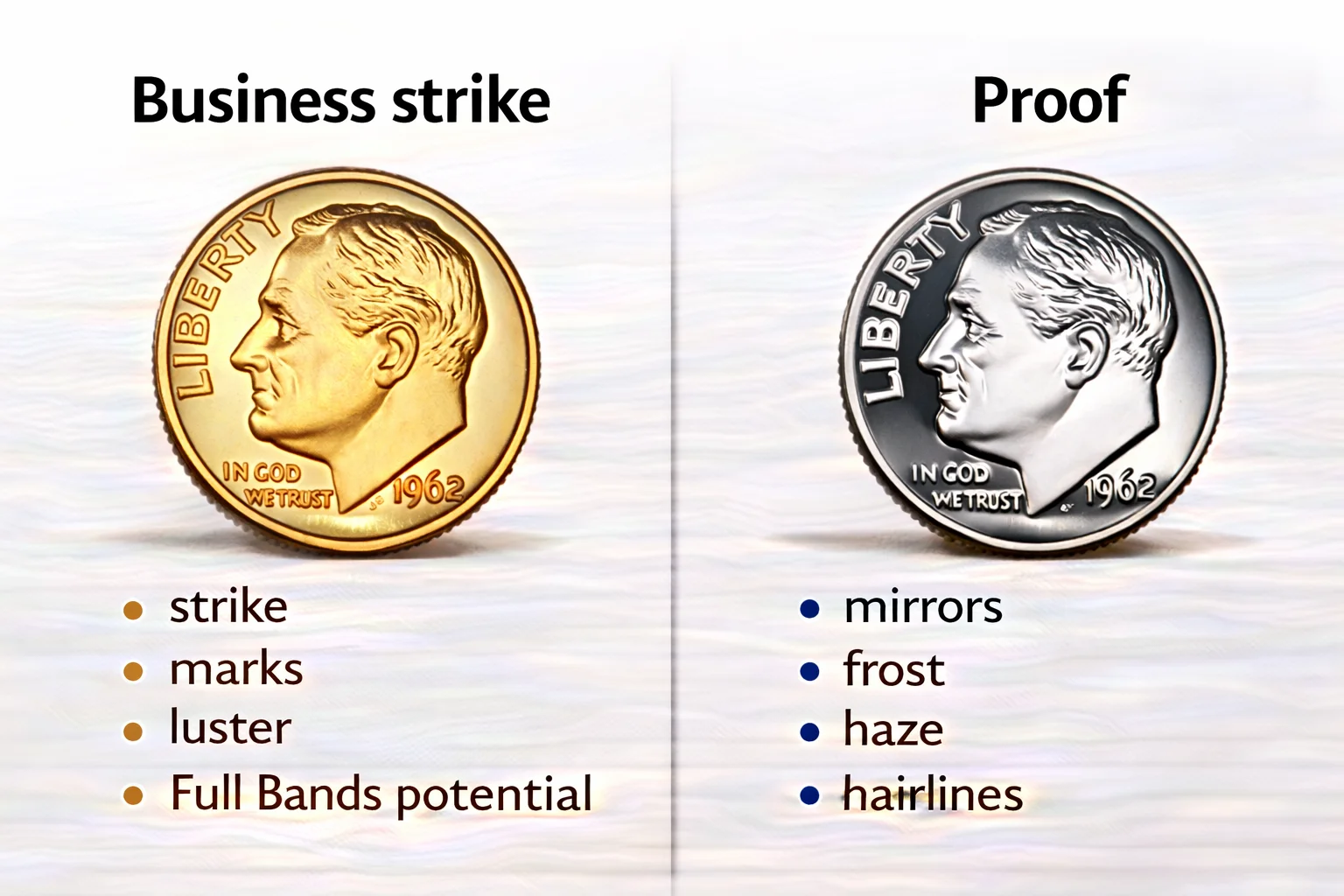
Proofs were made for collectors. They were struck differently. Buyers judge them by different standards. On a proof, the main questions are not the same as on a business strike. The focus moves to fields, frost, haze, spots, and hairlines.
That is why a proof should not be mixed into a Full Bands discussion too casually.
| Version | Main Buying Focus |
| Business Strike | Strike, Marks, Luster, Full Bands Potential |
| Proof | Mirrors, Frost, Surface Quality, Preservation |
A proof can be a strong coin without fitting the same logic as a circulation strike. Keep those lanes separate. It makes the market easier to read.
Where a Digital Tool Can Still Help
Collectors do not need an app to understand Full Bands. They do need a practical workflow. That is different.
A tool becomes useful before the final judgment stage. It helps when you sort, label, compare, and avoid mixing ordinary pieces with coins worth a closer second look. That is where a coin value app can fit.
Coin ID Scanner is one example. Used carefully, it helps with first-pass sorting, not final designation calls. The AI Coin Helper is useful for quick reference questions, and the collection management side helps track which dimes deserve another review under better light or magnification. That saves time when you handle groups of similar silver Roosevelt coins.
The key is simple: use the tool for structure, then use your eyes for the decision.
When It Makes Sense To Pay More for Full Bands
Not every collector needs to chase the designation. It depends on the goal.
For a basic silver set, a normal Mint State 1962 dime may be enough. For a cleaner album, a better-struck piece with fewer marks may be the right choice. For a specialist set, Full Bands starts to matter much more.
Buyers Who Benefit Most From Full Bands
- Registry collectors
- Roosevelt dime specialists
- High-grade set builders
- Buyers who prefer fewer but better coins
Buyers Who May Not Need It
- Basic album collectors
- Silver accumulators
- Casual type buyers
That is the practical conclusion. Full Bands is not mandatory. It is meaningful. On a common date, meaningful details shape the premium.
Conclusion
The 1962 dime is not a rare-date coin. That is exactly why Full Bands matters so much. The year is common. The better reverse is not. Once a collector understands that, the series becomes easier to read. Instead of asking only, “What year is it?” the better question becomes, “How well was it struck?”